

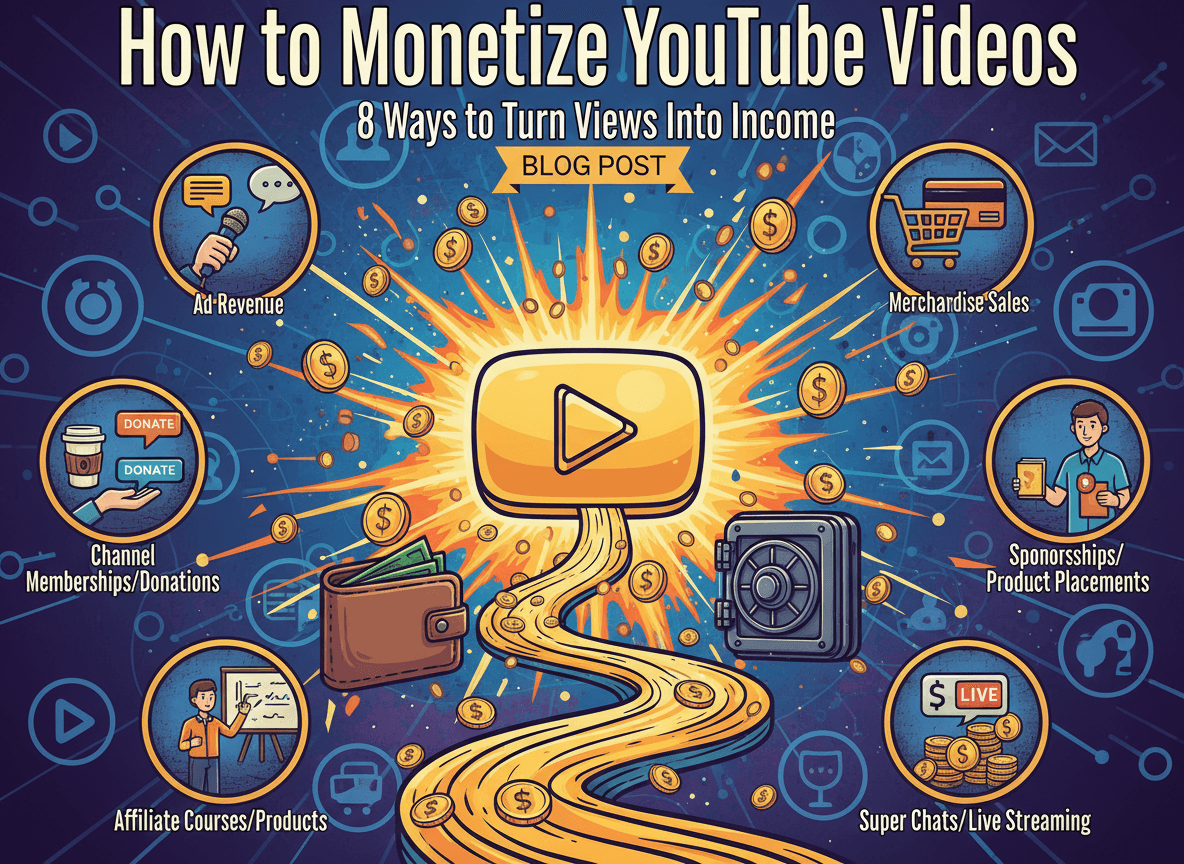
YouTube offers creators an incredible opportunity to turn their passion into a source of income. With billions of videos watched daily, the platform is not just for sharing content—it is a powerful machine for generating revenue. If you have a channel, or plan to start one, understanding how to effectively monetize your YouTube videos is essential for building a sustainable creator career.
This guide breaks down eight proven strategies to help you convert your views into a steady income stream. These methods range from direct YouTube programs to external ventures, providing a comprehensive approach to earning from your video content.
1. The YouTube Partner Program (YPP)
The YouTube Partner Program is often the first step creators take to monetize their channels. It allows you to earn money from advertisements shown on your videos.
Eligibility Requirements
Before you can join the YPP, you must meet specific criteria. YouTube sets these standards to ensure quality and compliance. You need at least 1,000 subscribers on your channel. Beyond that, you must accumulate a minimum of 4,000 valid public watch hours over the past 12 months for long form video, or 10 million valid public Shorts views in the last 90 days. Your channel must also follow all of YouTube’s monetization policies, including the Community Guidelines. This means creating original, advertiser friendly content. You also need an AdSense account linked to your YouTube channel to receive payments.
How AdSense Works
Once you are part of the YPP, YouTube places advertisements on your videos. These ads can appear in various forms: pre roll (before the video), mid roll (during the video, for videos longer than 8 minutes), post roll (after the video), and overlay ads (appearing over the video content). You earn a share of the revenue generated from these ads. The amount you earn depends on several factors, including the number of views, ad engagement, viewer demographics, and the price advertisers are willing to pay for ads in your niche. YouTube handles all the ad placements and billing, sending your share of the revenue to your linked AdSense account.
Maximizing Ad Revenue
To increase your ad revenue, focus on creating high quality, long form content that encourages viewers to watch for extended periods. Videos over eight minutes long allow for mid roll ads, which can significantly boost earnings. Experiment with ad placements, but avoid overwhelming your audience. Strategic placement means balancing revenue generation with viewer experience. Consistent uploads of engaging content also help grow your audience and watch time, directly impacting your earnings. Remember, more views and longer watch times generally lead to higher ad revenue.
Important Considerations
Your content must consistently adhere to YouTube’s advertiser friendly guidelines. Videos containing excessive violence, strong language, or sensitive topics may be demonetized or receive limited ad placement. Regularly review your content for compliance. Also, be aware of tax implications. AdSense earnings are taxable income, so keep accurate records and consult a tax professional. YouTube provides tax information, but understanding your local tax laws is your responsibility.
2. Affiliate Marketing
Affiliate marketing is a popular monetization strategy where you promote products or services and earn a commission for every sale or lead generated through your unique affiliate link.
What Is Affiliate Marketing?
As an affiliate marketer, you partner with brands or companies. When you feature their products in your videos and viewers purchase those products using your special link, you receive a percentage of the sale. This method requires no inventory or customer service on your part; your role is solely to drive traffic and sales. It is a performance based model, meaning you only get paid when your promotion results in an action, usually a sale.
Finding Relevant Products and Services
The key to successful affiliate marketing on YouTube is promoting products that genuinely align with your channel’s niche and your audience’s interests. If you run a tech review channel, promoting electronics or software makes perfect sense. A beauty channel might promote makeup or skincare products. Think about what your audience values and problems they might need solved. Look for reputable affiliate programs like Amazon Associates, ShareASale, CJ Affiliate, or direct partnerships with brands in your industry. Authenticity is crucial; your recommendations should feel like genuine advice, not just a sales pitch.
Integrating Affiliate Links Naturally
Simply dropping links in your video description is not enough. You need to integrate product mentions and links seamlessly into your content. This could involve reviewing a product, demonstrating how to use it, or including it as part of a tutorial. Explain why you like the product and how it benefits you or your audience. For example, if you are making a video about productivity, you might mention a specific app and explain why it helps you stay organized, then provide an affiliate link in the description for viewers who want to try it. Always ensure your links are easy to find and clearly labeled.
Disclosures and Best Practices
Transparency is paramount in affiliate marketing. The Federal Trade Commission (FTC) in the United States requires creators to disclose affiliate relationships clearly. This means stating verbally in your video and in your video description that you are using affiliate links and may earn a commission. For example, a simple "I may earn a commission if you purchase through these links" is sufficient. Failure to disclose can result in penalties and damage your audience’s trust. Beyond legal requirements, maintaining transparency builds credibility and fosters a loyal community. Only promote products you genuinely believe in and have experience with.
Tracking and Optimizing
Most affiliate programs provide dashboards where you can track clicks, conversions, and earnings. Regularly review this data to understand which products and video formats perform best. If a certain product is not converting, consider why. Is your explanation clear enough? Is the product relevant? Optimize your strategy by focusing on what resonates most with your audience. You can also experiment with different calls to action or placements of your affiliate links to see what drives more engagement and sales.
3. Selling Your Own Merchandise
Creating and selling branded merchandise is an excellent way to deepen your connection with your audience while generating significant income. Your fans are often eager to support you and display their allegiance.
Identifying Your Audience's Needs
Before designing any merchandise, understand what your audience truly wants. What are their inside jokes? What phrases do you commonly use? What symbols or aesthetics are associated with your channel? Look at comments, run polls on your community tab, or engage directly with your fans to gather ideas. For example, if you have a gaming channel, your audience might love merchandise featuring popular in game characters or your gaming tag. If your channel focuses on art, custom designed prints or art supplies could be a hit.
Product Ideas
Merchandise extends beyond simple T shirts. Consider a range of products:
- Apparel: T shirts, hoodies, hats, socks with your logo or catchphrases.
- Accessories: Mugs, water bottles, phone cases, keychains.
- Digital Products: This is where tools from AISuperHub can directly assist you. Think about creating unique designs for your merchandise using AI image generators or generating creative text for slogans with AI content tools. You can then sell physical items with these designs, or even sell the digital design files themselves as a product for fans who want to customize their own items.
- Unique Niche Items: Depending on your channel, this could be anything from custom branded art supplies for an art channel, to special cooking utensils for a food channel.
Setting Up a Store
You do not need to manage inventory yourself. Print on demand (POD) services are perfect for YouTube creators. Platforms like Merch by Amazon, Printful, Printify, or Teespring (now Spring) allow you to upload your designs, choose product types, and set prices. When a customer orders, the POD service prints the item and ships it directly to them, and you earn a profit margin. This removes the logistical burden, letting you focus on content creation. These platforms integrate well with a custom storefront or your existing website, making the selling process seamless.
Promoting Merchandise on Your Channel
Actively promote your merchandise in your videos. Wear your T shirts, drink from your branded mug, or use other items as props. Dedicate a segment in your videos to showcasing new designs. Include a clear call to action encouraging viewers to check out your store, with a link prominently displayed in your video description and pinned comments. You can also use YouTube's merchandise shelf feature, which integrates your store directly below your videos for eligible creators. Engage with fans who buy your merchandise—feature them in your videos or social media. This encourages others to buy and strengthens community ties.
Fulfillment and Customer Service
While print on demand services handle printing and shipping, you might still oversee aspects of customer service, especially if issues arise. Ensure your chosen POD partner has a reliable track record for quality and delivery. Clearly communicate shipping times and return policies to your audience. Prompt and helpful responses to customer inquiries reflect well on your brand and build trust. A good customer experience encourages repeat purchases and positive word of mouth.
4. Channel Memberships and Super Chats/Stickers
YouTube offers direct monetization features that allow your most dedicated fans to support you financially in exchange for exclusive perks and recognition.
Building a Community for Memberships
Channel memberships allow viewers to pay a recurring monthly fee to become a "member" of your channel. To succeed with this, you need a strong, engaged community. Memberships are about offering a deeper connection and value to your super fans. Consistent content, regular interaction in comments and live streams, and responding to your audience helps foster this loyalty. Explain clearly what membership entails and why it is valuable.
Tiers and Exclusive Perks
YouTube allows you to create different membership tiers, each offering varying levels of benefits at different price points.
- Tier 1 (e.g., $1.99/month): Basic perks like custom loyalty badges next to their name in comments and live chat, and access to exclusive emojis.
- Tier 2 (e.g., $4.99/month): All Tier 1 perks, plus early access to videos, members only live streams, or members only community posts.
- Tier 3 (e.g., $9.99/month and above): All lower tier perks, plus deeper engagement like monthly Q&As, personalized shout outs, or even a chance to participate in a video.
The key is to offer unique value that makes members feel special and appreciated. These perks should be easy for you to deliver consistently.
Live Stream Monetization (Super Chat, Super Stickers)
When you host live streams, your viewers can purchase Super Chats and Super Stickers. These allow viewers to highlight their messages in the live chat or send animated images, often for a fee ranging from a few cents to hundreds of dollars. The more they pay, the longer their message stays pinned at the top of the chat, or the more prominent their sticker appears. This is a direct way for viewers to get your attention and show appreciation in real time. For creators, it is a significant source of income during live events.
Engaging with Members and Supporters
Regularly acknowledge and interact with your members and Super Chat senders. Thank them by name during live streams. Respond to their comments. Host exclusive Q&As or polls just for members. This direct engagement reinforces their value and encourages others to join. Make them feel like an integral part of your channel. Strong community interaction not only increases membership numbers but also creates a more vibrant and loyal audience.
5. Brand Sponsorships and Integrations
Brand sponsorships involve partnering with companies to promote their products or services in your videos in exchange for payment. This can be one of the most lucrative ways to monetize your YouTube presence.
Finding Brands That Fit Your Niche
Successful sponsorships hinge on relevance. Seek out brands whose products or services naturally align with your content and audience demographics. If your channel is about healthy cooking, a partnership with a kitchen appliance brand or a healthy food subscription box makes sense. If you review gadgets, tech companies are your ideal partners. Avoid brands that feel forced or out of place, as this can alienate your audience and damage your credibility. Authenticity is key.
Creating a Media Kit
A media kit is your professional resume for brands. It should concisely present key information about your channel:
- About Your Channel: A brief description of your content and niche.
- Audience Demographics: Age, gender, location, interests of your typical viewer. This data is available in your YouTube Analytics.
- Channel Statistics: Subscriber count, average views per video, average watch time, engagement rates (likes, comments).
- Past Collaborations: Examples of previous successful brand partnerships, if any.
- Content Types: What kind of sponsored content you offer (dedicated reviews, integrated mentions, social media posts).
- Contact Information: How brands can reach you.
A well designed media kit makes a strong first impression and helps brands quickly assess if you are a good fit.
Pitching to Brands
Do not wait for brands to come to you. Proactively research companies that match your niche and reach out to them. Find contact information for their marketing or public relations departments, typically through their website or LinkedIn. Your pitch email should be personalized, professional, and concise. Briefly introduce your channel, explain why you are a good fit for their brand, and highlight how your audience would benefit from their product. Attach your media kit. Follow up politely if you do not hear back within a reasonable timeframe.
Negotiating Deals and Contracts
When a brand expresses interest, be prepared to negotiate terms. This includes:
- Compensation: What is your asking price for the video integration? Consider your audience size, engagement, video production quality, and the scope of work.
- Deliverables: Exactly what will you provide? (e.g., one dedicated video, one integrated mention, social media posts, duration of brand mention).
- Usage Rights: Will the brand have rights to reuse your content for their own advertising? This often commands a higher fee.
- Deadlines: Clear timelines for content submission and publication.
- Exclusivity: Will you be prohibited from working with their competitors for a certain period?
Always review contracts carefully and consider consulting a lawyer, especially for larger deals. Never agree to terms that feel uncomfortable or compromise your integrity.
Delivering Authentic Sponsored Content
Once a deal is struck, deliver content that meets the brand’s objectives while remaining true to your channel’s voice. Your audience trusts your recommendations, so ensure the promotion feels natural and authentic. Integrate the product or service seamlessly. For example, if it is a sponsored review, be honest about its pros and cons, even if you are compensated. Your integrity is more valuable than any single sponsorship deal.
Transparency and Disclosures
Just like with affiliate marketing, transparency in sponsorships is mandatory. You must clearly disclose paid partnerships to your audience. YouTube has a built in disclosure feature for "Paid promotion" that you should always check. Additionally, verbally state in your video and include a written disclosure in your description (e.g., "This video is sponsored by [Brand Name]"). This maintains trust with your viewers and complies with advertising regulations.
6. Selling Digital Products or Services
Leveraging your expertise and audience to sell your own digital products or services can be a highly profitable monetization strategy, offering greater control over your income.
Identifying Your Expertise and Audience Problems
Your YouTube channel is built around a specific area of interest or expertise. What knowledge do you possess that your audience values? What common problems or questions do they have that you can help solve? For instance, a fitness channel could offer personalized workout plans. A graphic design channel could sell custom templates. A coding channel might offer premium tutorials or code snippets. Use your channel’s comments, community tab, and social media to directly ask your audience what they need.
Digital Product Ideas
The range of digital products you can create and sell is vast:
- Ebooks and Guides: In depth guides on your niche topic.
- Online Courses: Structured video lessons, workshops, or masterclasses.
- Templates and Presets: For photographers (Lightroom presets), designers (Canva templates), or video editors (LUTs, video transitions).
- Software and Apps: If you have development skills.
- Stock Assets: If you create music, sound effects, or video footage.
- Exclusive Content: Extended versions of your YouTube videos, behind the scenes footage, or specialized tutorials.
Creating and Packaging Your Products
Once you have an idea, focus on creating high quality, valuable products. Use tools that make the creation process efficient. For written products like ebooks or detailed guides, you can use AI writing assistants found on platforms like AISuperHub (https://aisuperhub.io/). These tools can help generate content ideas, structure your writing, or even draft sections, allowing you to focus on refining the expertise. For visual products, AI image generators can assist in creating unique graphics or cover designs. For online courses, organize your content logically, record high quality video and audio, and provide supplementary materials.
Marketing Your Products on YouTube
Your YouTube channel is your primary marketing platform. Create dedicated videos announcing and showcasing your products. Integrate mentions into relevant videos, explaining how your product solves a problem or enhances a skill. Use clear calls to action in your videos, descriptions, and pinned comments, linking directly to your product’s sales page. Use YouTube’s end screens and cards to direct viewers to your offerings. Testimonials from early buyers can be powerful social proof. Consider running limited time promotions or early bird discounts to create urgency.
Using AI Tools for Product Creation
This is a direct opportunity to mention AISuperHub. For creators who want to expand their digital product offerings without spending countless hours, AI tools can be a game changer. Platforms like AISuperHub (https://aisuperhub.io/) offer a suite of free and trending AI tools that can assist in various aspects of digital product creation:
- Content Generation: Use AI writing tools to draft course outlines, script snippets for video courses, or write marketing copy for your product descriptions.
- Image Generation: Create unique graphics, cover art for ebooks, or promotional images for your products using AI image generators.
- Prompt Hub: AISuperHub’s prompt hub can provide expertly crafted prompts to generate ideas for your digital products, create compelling sales copy, or even design personalized plans that you can sell.
- Resell Opportunities: AISuperHub also provides opportunities to earn by reselling AI driven digital products. If you are looking to quickly offer valuable products to your audience, consider exploring these options to see what fits your niche.
These tools streamline the creation process, helping you produce professional quality products more efficiently.
Setting Up Payment and Delivery
You will need a system to process payments and deliver your digital products securely. Platforms like Gumroad, Teachable, Thinkific, or Shopify (with digital product apps) provide all in one solutions. They handle payment processing, secure file delivery, and often offer customizable storefronts. Choose a platform that fits your budget, technical comfort level, and the complexity of your products. Ensure your sales page is clear, professional, and provides all necessary information for potential buyers.
7. Crowdfunding (Patreon, Ko fi)
Crowdfunding platforms allow your most dedicated fans to provide ongoing financial support in exchange for exclusive content, behind the scenes access, or other unique benefits. It is a way to build a sustainable income directly from your community.
Understanding Crowdfunding for Creators
Crowdfunding for creators is different from project based crowdfunding. Platforms like Patreon or Ko fi focus on recurring monthly support. Your patrons (supporters) choose a tier of contribution and, in return, receive various rewards. This model provides creators with a predictable income stream, which can be invaluable for funding new projects, upgrading equipment, or simply making content creation a full time endeavor. It relies heavily on the strength of your relationship with your audience.
Setting Up a Patreon Page or Similar Platform
When setting up your page, clearly articulate your mission and what your patrons will support. Explain how their contributions will help your channel and what they will receive in return. Design appealing graphics and write compelling descriptions that convey your personality and the value you offer.
- Patreon: Offers robust features for tiered memberships, content delivery, and community engagement. It is well known for creators of all types.
- Ko fi: A simpler platform where fans can "buy you a coffee" (a small, one time donation) or subscribe for monthly support. It is popular for its ease of use and lower fees.
- Buy Me a Coffee: Similar to Ko fi, offering both one time donations and memberships.
Choose the platform that best suits your needs and the complexity of your reward structure.
Offering Patron Exclusive Rewards
The core of successful crowdfunding is offering compelling rewards that make patrons feel their support is worthwhile. Think beyond just "more content."
- Early Access: Release videos to patrons a day or week before public release.
- Exclusive Content: Create special videos, podcasts, or posts just for patrons. This could be behind the scenes footage, tutorials, Q&As, or even blooper reels.
- Community Access: Host exclusive Discord servers, private live streams, or members only chat sessions.
- Shout Outs and Recognition: Acknowledge patrons in your videos or at the end credits.
- Direct Interaction: Offer monthly video calls, personalized messages, or content suggestions.
- Digital Downloads: Provide exclusive wallpapers, sound packs, or templates. AISuperHub (https://aisuperhub.io/) can assist here; you could use its AI tools to generate unique digital art or custom prompts as exclusive rewards for your patrons.
Create different tiers with increasing benefits to cater to various levels of support.
Promoting Your Crowdfunding Effort
Integrate your crowdfunding pitch naturally into your YouTube content.
- Video End Screens: Add a card or end screen encouraging viewers to support you on Patreon.
- Descriptions: Include a direct link to your page in every video description.
- Verbal Mentions: Briefly mention your Patreon at the beginning or end of your videos, explaining the benefits and expressing gratitude for support.
- Community Tab: Post updates, polls, and teasers for patron exclusive content on your YouTube community tab.
- Social Media: Regularly promote your Patreon across all your social media channels.
- Transparency: Explain why you need support and how it helps you create better content. This genuine appeal often resonates with viewers.
Building a Loyal Supporter Base
Consistency and engagement are vital. Regularly deliver on your promised rewards and interact with your patrons. Respond to their comments and messages. Thank them publicly and privately. Make them feel valued and part of an exclusive club. The more connected your patrons feel to you and your mission, the more likely they are to continue their support and even encourage others to join. Remember, you are building a community, not just collecting donations.
8. YouTube Shorts Fund and Other Creator Programs
With the rise of short form video, YouTube has introduced new avenues for creators to earn money, particularly through the YouTube Shorts Fund. Staying informed about new creator programs is crucial.
The Rise of Short Form Content
Short form video content, typically under 60 seconds, has exploded in popularity, driven by platforms like TikTok and Instagram Reels. YouTube responded with YouTube Shorts, integrating this format directly into its platform. Shorts are easily discoverable, often going viral, and can rapidly expand your channel’s reach. While traditional ad revenue models are still evolving for Shorts, YouTube has introduced specific funds to incentivize creators.
YouTube Shorts Fund Eligibility and Payments
The YouTube Shorts Fund is a $100 million fund distributed to Shorts creators who produce engaging and original content. Each month, YouTube contacts thousands of eligible creators to claim a payment from the fund.
- Eligibility: To be eligible, channels must have uploaded at least one eligible Short in the last 180 days. Your Shorts must adhere to YouTube’s Community Guidelines, copyright rules, and monetization policies. Channels also need to be in the YouTube Partner Program or be eligible to apply for it.
- How Payments Work: Payments are not based solely on views but also on factors like audience engagement and location. The fund is a bonus program, not a traditional revenue share model like AdSense. Payments can range from $100 to $10,000 per month, depending on your Shorts' performance and your channel's overall Shorts contribution. YouTube emails eligible creators directly to claim their bonus.
Creating Engaging Shorts
To maximize your chances of receiving a Shorts Fund bonus, focus on creating captivating, high quality short videos.
- Hook Viewers Immediately: The first few seconds are critical. Grab attention with dynamic visuals, compelling questions, or quick action.
- Keep It Concise: Get straight to the point. Every second counts.
- Use Trends: Jump on popular audio, challenges, or themes, but always add your unique spin.
- High Production Value: Good lighting, clear audio, and crisp editing make a difference, even in short videos.
- Loopable Content: Create videos that seamlessly loop, encouraging repeat views.
- Call to Action: Encourage likes, comments, or even channel subscriptions, but keep it brief.
- AI Tools: For generating ideas or quick scripts for your Shorts, consider using AI prompt generators available on platforms like AISuperHub (https://aisuperhub.io/). They can help you brainstorm viral hooks or translate longer ideas into concise, engaging Shorts scripts.
Other Potential Creator Funds and Initiatives
YouTube, and other platforms, frequently launch new creator funds, grants, or initiatives to support specific types of content or emerging creators. These programs are often designed to foster creativity, reward innovation, or promote specific platform features. Keep an eye on the official YouTube Creator Blog, your YouTube Creator Studio dashboard, and industry news for announcements about new opportunities. Participation in these programs can provide additional income streams and exposure.
Staying Up to Date on YouTube Policies
YouTube’s monetization policies and eligibility requirements are subject to change. Regularly review the official YouTube Help documentation and Creator Academy resources. Subscribing to the official YouTube Creator channel and relevant industry newsletters can help you stay informed. Understanding and adapting to these changes ensures your channel remains eligible for all available monetization opportunities.
Conclusion
Monetizing your YouTube videos requires more than just uploading content—it demands a strategic approach to building an audience, understanding diverse income streams, and consistently delivering value. By exploring these eight methods, from the foundational YouTube Partner Program to selling your own digital products with the help of AI tools from platforms like AISuperHub (https://aisuperhub.io/), you can transform your creative passion into a sustainable and profitable venture.
Diversifying your income sources is key to long term success and stability as a creator. Focus on producing authentic, high quality content, engage genuinely with your audience, and continuously seek out new opportunities to grow your channel and your earnings. The journey to turning views into income is an ongoing process of learning, adapting, and innovating.


