

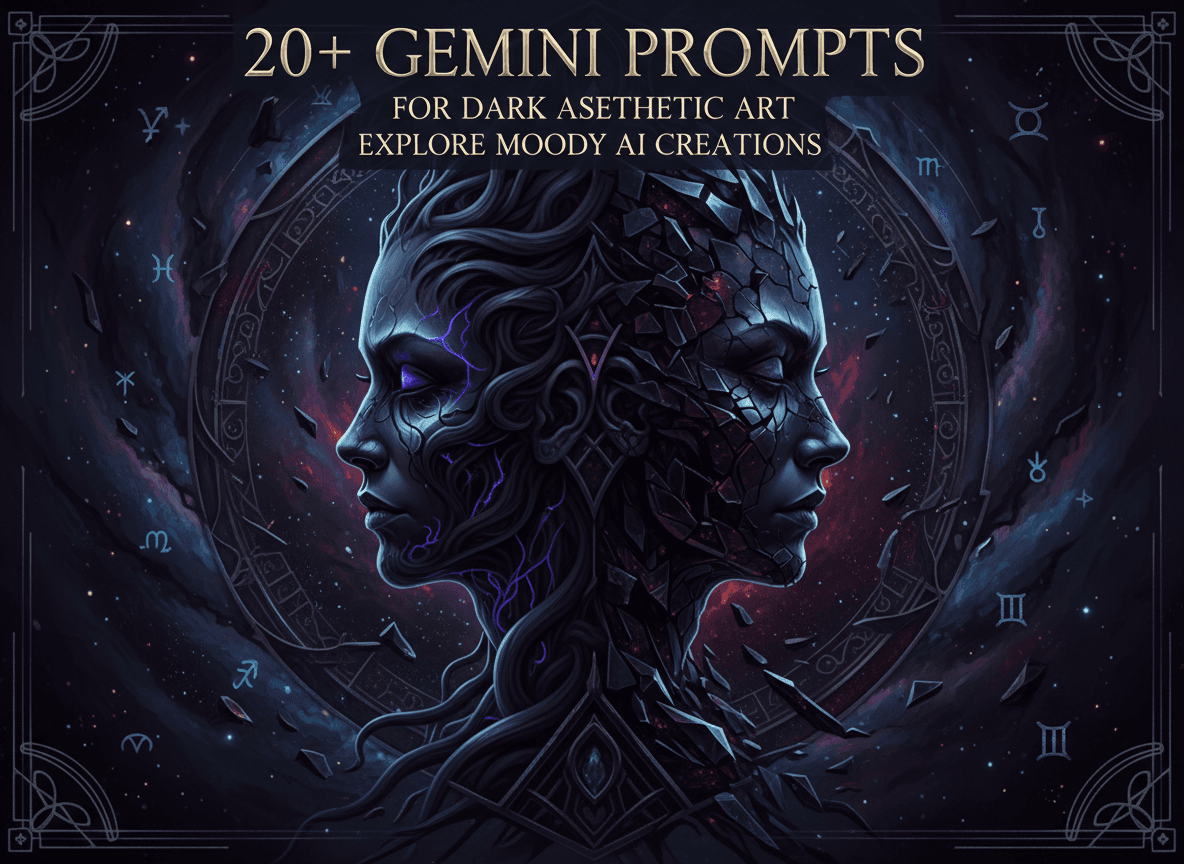
Dark aesthetic art relies on shadows and mood to tell a deep story. You create scenes that feel heavy and mysterious by using specific descriptive language. Google Gemini offers a direct path to generate these visuals through text if you use the right keywords. This guide provides more than 20 specific prompts to help you produce striking dark art and explains the mechanics of moody image generation for your creative projects.
Defining the Dark Aesthetic in AI Generation
Dark aesthetics focus on the beauty found in shadows and contrast. You want to make scenes that feel evocative. This style often involves gothic elements, melancholic themes, and a sense of isolation. Gemini interprets these visual requests by looking for specific textures like cold stone, velvet, and mist. You get the best results when you avoid generic terms. Instead of asking for something dark, you specify the lighting and the feeling of the space.
Think about the weight of the image. A dark aesthetic piece should feel heavy. You achieve this by describing thick shadows that swallow the details. Focus on the interplay between a single light source and the surrounding gloom. This creates a focal point that draws the eye. When you generate gothic images gemini, you use terms like obsidian, charcoal, and murky to set the base tone. This approach sets the stage for a unique visual experience.
Mastering Chiaroscuro with Gemini
Chiaroscuro is the use of strong contrasts between light and dark. This technique defines high-quality ai dark art. You need to tell the AI exactly where the light comes from. If you leave it to chance, the AI might produce a flat image. You want the shadows to have a shape and a presence. Use descriptions like harsh side-lighting or low-angle illumination. These phrases force the AI to build deep pockets of darkness.
Experiment with different light sources. A flickering candle produces a different shadow than a harsh neon sign in a rainy alley. You can check out 14+ Gemini Prompts for Creative Writing: Spark Your Next Bestseller to see how descriptive language builds atmosphere in text. The same logic applies to art. You describe the atmosphere, and Gemini builds the visual representation. The goal is to make the light feel fragile against the overwhelming darkness.
Atmospheric Interior Prompts
Interiors allow you to control every detail of the environment. You can set a scene in a dusty library or a cold basement. The key is the texture of the materials. Mention wood grain, peeling wallpaper, or cold marble. These details catch the light and create interest within the shadows. Here are some prompts to start with:
A Victorian study at midnight. Only a single dying candle flickers on an oak desk. Thick dust motes float in the dim light. Deep shadows hide the corners of the room. High contrast. 8k resolution.
An abandoned attic filled with draped furniture. The moon shines through a cracked window, casting long, sharp shadows across the floor. Eerie silence. Grainy film texture. Dark academia style.
A narrow hallway in an old mansion. Heavy velvet curtains line the walls. A single lantern hangs at the far end, barely pushing back the gloom. Moody lighting. Deep blacks and rich reds.
Architectural Decay and Gothic Scenes
Ruins provide the perfect backdrop for moody ai art prompts. There is something inherently dark about a structure that nature is reclaiming. You want to focus on the scale of the buildings. High ceilings, pointed arches, and crumbling pillars work best. This creates a sense of lost grandeur. When you use Gemini, describe the state of the building. Is it rusted? Is it covered in black vines? These details add character to the image.
A massive gothic cathedral standing alone in a barren field. The stone is black and weathered. Low-hanging storm clouds swirl around the spires. Cinematic lighting. Dark fantasy aesthetic.
An iron gate leading to a forgotten cemetery. The bars are rusted and twisted. Thick fog rolls over the ground, obscuring the tombstones. High contrast black and white photography style.
A crumbling stone bridge over a black river. The sky is a bruised purple. Silhouettes of dead trees frame the scene. Melancholic atmosphere. Intricate details on the stone.
Using Mist and Fog for Depth
Mist is a tool for hiding and revealing. It adds layers to your image. Without it, your dark art might feel two-dimensional. You want to create a foreground, a middle ground, and a background. Fog helps blur the distant objects, making the scene feel endless. It also softens the light, creating a glow that looks ghostly. This is a staple in gemini dark aesthetic prompts.

-> Get Instant Access to the 50,000+ AI Mega Prompt Bundle with Resell Rights
Describe the density of the fog. Is it a light haze or a thick soup? Does it cling to the ground or hang in the air? Use these variations to change the mood. A light mist feels mysterious. A thick fog feels oppressive. Both have their place in the dark aesthetic. Use them to guide the viewer’s focus to the objects that remain clear in the foreground.
Character Portraits in Shadow
Portraits in the dark aesthetic focus on mystery. You don't want to show every feature of the person's face. Hide the eyes in shadow. Use a hood or a mask to create intrigue. The clothing should have interesting textures like lace, leather, or heavy wool. These materials interact with the shadows in different ways. This adds a tactile feel to the generated image.
A close-up portrait of a figure wearing a tattered black hood. Only the lower half of the face is visible. The lighting is harsh and from the side. Dark, moody background. Gritty texture.
A woman in a Victorian mourning dress standing in a forest. She holds a single wilted rose. The scene is lit by a pale moon. Eerie and elegant. High contrast.
A silhouette of a tall man in a long coat. He stands under a flickering streetlamp in a fog-filled city. Only his outline is sharp. Noir style. Cinematic composition.
Eerie Natural Environments
Nature can be terrifying and beautiful at the same time. Think of forests where the trees look like reaching hands. Or a jagged coastline under a black sky. These environments work well because they feel ancient and uncaring. You want to use a palette of desaturated colors. Greys, browns, and dark blues dominate this space. Avoid bright, saturated tones unless they represent a specific magical element.
A forest of twisted, leafless trees. The ground is covered in black sand. A red moon hangs low in the sky, casting a bloody glow on the branches. Surreal dark art. High detail.
High-altitude mountains during a blizzard at night. The peaks are sharp and obsidian-colored. Swirling snow obscures the view. Oppressive atmosphere. Cold color palette.
A calm, black lake reflecting a stormy sky. No ripples on the water. A single dead tree stands in the center of the lake. Minimalist and moody. Sharp edges.
Cyberpunk Noir Prompts
You can mix technology with the dark aesthetic. This creates a style known as tech-noir or cyberpunk noir. Focus on wet streets, neon lights reflected in puddles, and cramped urban spaces. The darkness comes from the shadows of the massive buildings. The light comes from signs and screens. This contrast makes the city feel alive but cold.
A rainy city street at night. Tall skyscrapers block out the sky. Neon blue and purple signs flicker in the distance. The pavement is wet and reflects the dim lights. Gritty urban aesthetic.
A dark cybernetic workshop. Tools hang on the walls. A single computer screen glows with green text, lighting a metallic arm on a workbench. High contrast. Industrial feel.
A lonely figure looking out a window at a futuristic city shrouded in smog. The interior is dark. The city outside is a blur of orange and black. Melancholic sci-fi.
Minimalist Dark Art Prompts
Sometimes, less is more. You don't need a complex scene to convey mood. A single object in a void can be very striking. Focus on the shape and the silhouette. Use a completely black background to make the subject pop. This style is perfect for logos or conceptual art. It forces the viewer to focus on the form rather than the environment.
A single white skull resting on a black silk cloth. Total darkness in the background. One light source creates sharp highlights. Minimalist dark aesthetic. High resolution.
A black feather falling through a gray mist. Simple composition. Soft lighting. Focus on the texture of the feather. Calm but moody.
A hand reaching out from the shadows. Only the fingers are caught in a sliver of light. Mysterious and eerie. Black and white. High contrast.
Technical Tips for Better Results
When you work with Gemini, the order of your words matters. Start with the subject, then the setting, then the lighting. Use technical terms from photography. Words like focal length, ISO, and aperture help the AI understand the style. If you find your images are too bright, add negative prompts if the interface allows, or simply emphasize the words deep shadows and midnight.

-> Get Instant Access to the 21,000+ AI Image Prompt Bundle with Resell Rights
If you run into issues with generation limits or technical constraints, you should learn about managing your resources. For instance, knowing 14+ Ways to Reduce Claude Code Token Usage limits : Must learn for everyone helps you understand how AI models process data. While that guide focuses on code, the logic of efficiency remains the same across different platforms. Keep your prompts concise to get the most accurate results from the model.
Material and Texture Focus
Textures bring life to dark art. You want the viewer to feel the coldness of the stone or the softness of the velvet. Use sensory words in your prompts. Mention dampness, grit, or smoothness. When Gemini processes these words, it adjusts the micro-details of the image. This makes the final product look more realistic and less like a generic AI output.
A close-up of rusted iron chains hanging in a dungeon. Water droplets cling to the metal. Dim, ambient light. Macabre and industrial. High texture detail.
A piece of black lace draped over a silver mirror. The mirror is cracked. Soft, diffused lighting. Victorian gothic aesthetic. Intricate patterns.
Wet cobblestones in a dark alleyway. The texture of the stone is sharp and clear. Reflections of a hidden light source. Gritty and atmospheric.
Color Palettes Beyond Black
Dark aesthetic art is not limited to black and white. You can use deep, saturated colors to enhance the mood. Emerald green, navy blue, and burgundy red work well. These colors should feel heavy. Avoid bright neons unless you want a specific contrast. The goal is to use color to suggest emotion. Green can feel sickly or natural. Blue can feel cold or calm. Red can feel violent or romantic.
Think about the temperature of the image. A cool color palette feels distant and icy. A warm but dark palette feels claustrophobic and intense. Use these shifts to tell different stories. You can find more tools to help with these artistic decisions at aisuperhub.io. Using a mix of expert prompts and the right tools ensures your output remains consistent and professional.
Scaling Your Creative Projects
Once you master these prompts, you might want to use your art for more than just a hobby. You can build brands, create book covers, or design assets for games. Scaling your output requires a strategy. You need to move from single images to entire collections. This requires consistency in your prompt style. Use a base template and swap out the subjects to maintain a cohesive look across your project.
If you want to grow your reach or turn your art into a business, check out Stop Vibe Coding and Start Scaling: 7 AI Distribution Strategies to Get Your First 10,000 Customers. It provides a framework for moving from a creator to a business owner. The transition involves more than just making good art. It requires distribution and strategy. Dark aesthetic art has a massive following. Tapping into that market can be very rewarding if you approach it with a plan.
Finalizing Your Dark Vision
Generating dark art with Gemini is an iterative process. You will rarely get the perfect image on the first try. Tweak the lighting. Change the texture. Adjust the perspective. Every small change shifts the mood. Use the prompts provided here as a foundation. Build upon them. Add your own unique details.
Bottom line: The dark aesthetic is about emotion. It is about capturing a feeling that words sometimes fail to describe. By using high contrast, specific textures, and moody lighting, you produce images that resonate with viewers. Keep experimenting with the prompts. The more you use the tool, the better you become at guiding it. Dark art is a journey into the shadows. You have the tools. Now, go make something memorable.


